
Understanding Glaucoma Diagnosis at Your First Eye Appointment
What to Expect at Your First Glaucoma Assessment
Being referred for a glaucoma check can feel unnerving, particularly if a relative has the condition or your optician mentioned something they wanted to look at more closely. The good news is that a first assessment is rarely uncomfortable and usually takes between 45 and 90 minutes. It is a series of simple, well-established tests that build a picture of your eye health rather than a single pass-or-fail moment.
It helps to arrive prepared. Bring a list of any medicines you take, mention any family history of glaucoma, and be ready to say whether you have noticed blurred vision, halos around lights, or discomfort. If your pupils will be dilated, arrange for someone to drive you home and pack sunglasses, as bright daylight can feel harsh for a few hours afterwards.
Measuring Your Eye Pressure
Eye pressure, or intraocular pressure, is usually the first thing measured. Most people are familiar with the quick puff of air, but many clinics use a more precise method called applanation tonometry, where a numbing drop is placed on the eye and a small instrument gently touches the surface to measure resistance. It sounds worse than it feels and takes only seconds.
- Normal range: typically between 10 and 21 millimetres of mercury (mmHg), though this varies between individuals.
- Timing matters: pressure fluctuates throughout the day, so a single reading is only a snapshot.
- Context is key: some people develop glaucoma with pressures in the normal range, while others run high pressures for years without any nerve damage.
This is why your clinician will never diagnose glaucoma on pressure alone. It is one piece of a much larger puzzle.
Examining the Optic Nerve
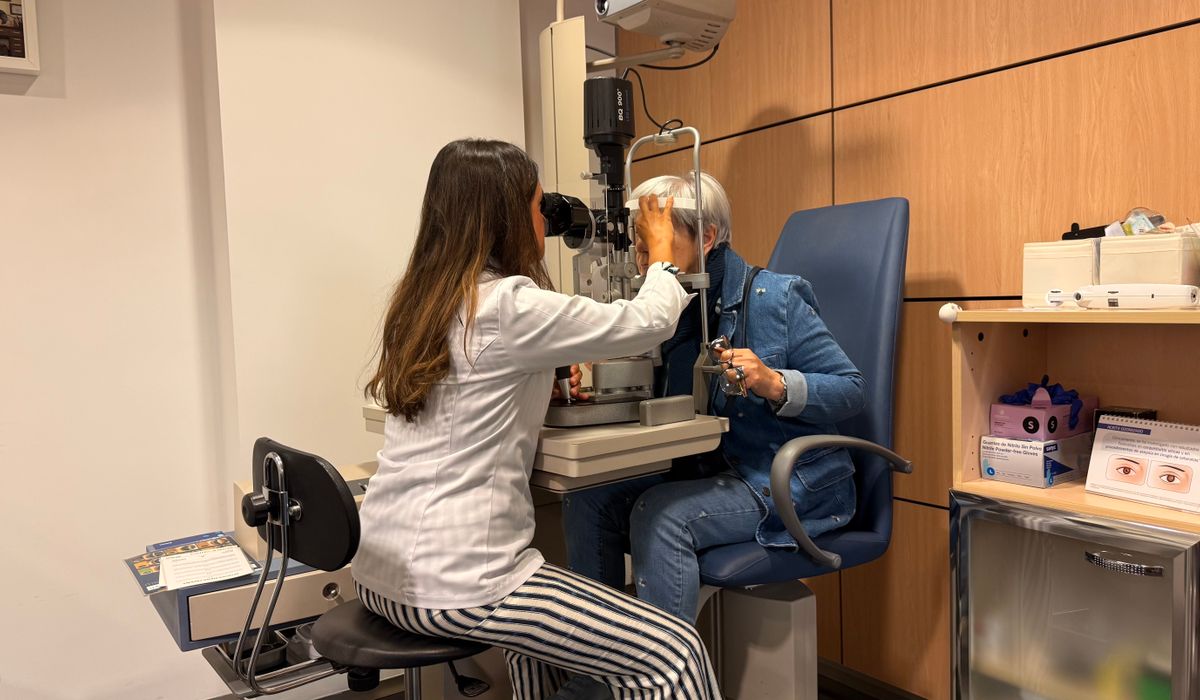
The optic nerve is the cable that carries visual information from the eye to the brain, and it is where glaucoma does its damage. Your clinician will examine it using a slit lamp, sometimes after dilating drops, and will look closely at the shape and colour of the nerve head. In glaucoma, the central hollow area, known as the cup, tends to enlarge as nerve fibres are lost.
Many clinics also take a photograph or a digital scan of the nerve. These images are stored so that future appointments can be compared side by side. This is invaluable, because subtle changes over a year are far easier to spot against a clear baseline than by memory alone.
Visual Field Testing
This is the test that measures how much you can actually see in your peripheral vision, where glaucoma tends to strike first. You will sit in front of a bowl-shaped screen, one eye covered, and press a button each time you notice a small light appear. It is not a test of how fast you are; it is a map of your sensitivity across the whole field of view.
Each eye usually takes five to ten minutes, and it can feel tiring. The machine also runs its own checks, watching whether you blink at the right moments or press the button when no light appeared, to gauge how reliable the results are. Do not worry if you feel you missed a few lights. Your clinician reads the overall pattern, not each individual dot.
Additional Checks: Gonioscopy and Corneal Thickness
Two further tests often feature in a first assessment. Gonioscopy uses a special contact lens and a bright slit lamp beam to examine the drainage angle, the area where fluid leaves the eye. This helps distinguish open-angle glaucoma from the less common closed-angle types, which need different management.
Pachymetry measures the thickness of your cornea. This matters because a thin cornea can cause pressure readings to appear lower than they truly are, while a thick cornea can make them look higher. Knowing your corneal thickness allows your clinician to interpret your pressure readings more accurately and refine your risk profile.
Making Sense of the Results
After the tests, you should expect a clear conversation about what was found. A diagnosis is not made on one appointment alone. If the findings are borderline, you may be described as a glaucoma suspect and invited back for monitoring in six to twelve months rather than starting treatment immediately.
If treatment is recommended, it is usually in the form of daily eye drops, sometimes a laser procedure, and occasionally surgery. Whatever the outcome, the most important thing you can do is attend your follow-up appointments. Glaucoma is a slow, silent condition, and regular monitoring is what protects your sight over the long term. Ask questions, take notes, and if anything about your drops or schedule is unclear, say so. A well-informed patient is a well-protected one.
tag: Diagnosis

Mr Rowan Griffiths Author
Age, family history, ethnicity, and certain medical conditions can raise your risk. Knowing these factors helps you seek timely eye checks.
YOU MAY ALSO LIKE

Common Risk Factors That May Increase Glaucoma Chances
Sep 20
10Bring a list of questions to your appointment, covering treatment options, daily routines, and what to expect from ongoing monitoring.
read more
Questions to Ask When Newly Diagnosed with Glaucoma
Sep 15
10Learn how to instil eye drops correctly, avoid contamination, and manage side effects while keeping a steady routine each day.
read moreDiagnosis
-

ERRIC CATONA
Laser procedures can help lower eye pressure when drops are not enough. This article outlines types, benefits, and aftercare.
May 19, 2016 at 5.12 pm
Reply
ERRIC CATONA
Some people need more than one medication. Understand how combinations work, possible interactions, and why timing matters for control.
May 19, 2016 at 5.12 pm
Reply -
ERRIC CATONA
Visual field tests map your peripheral vision and help clinicians detect changes that may indicate worsening glaucoma between appointments.
May 19, 2016 at 5.12 pm
Reply
Treatments
Your email address will not be published.