
What Your Eye Pressure Reading Really Means
What the number actually measures
When your optometrist or specialist says your pressure is "18", they're talking about the force your eye's internal fluid exerts against the wall of the eye. That fluid, called aqueous humour, is produced continuously and drains continuously through a meshwork of tissue near the base of the iris. When production and drainage stay balanced, pressure stays steady. When drainage slows, pressure rises.
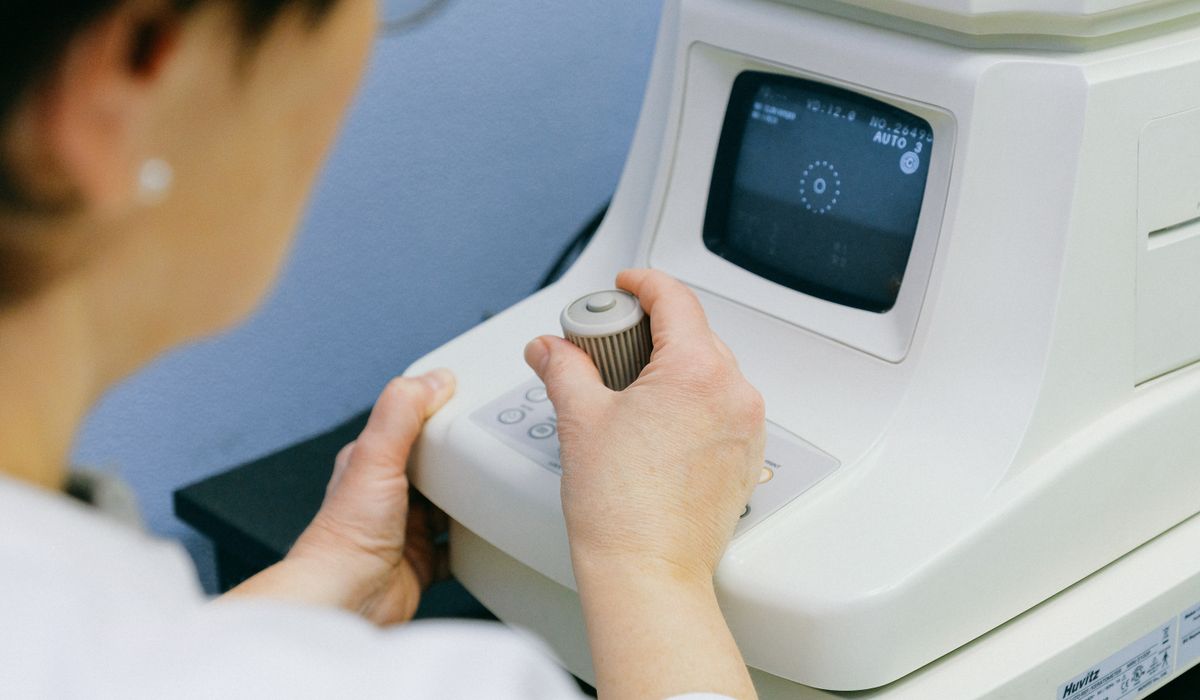
The unit is millimetres of mercury, written as mmHg. It's measured with a technique called tonometry. Some practices use a puff of air; hospital clinics often use a small probe that briefly touches the front of your eye after a numbing drop goes in. Neither is painful, though the puff can make you blink.
So what counts as a "normal" reading?
Most people sit somewhere between 10 and 21 mmHg. That range comes from population averages, and averages are blunt instruments. Think of it as a bus timetable rather than a legal limit.
Plenty of people walk around with a pressure of 23 and never develop glaucoma. Others sit comfortably at 16 and still lose vision. The number alone cannot tell you which group you're in. What matters is whether that pressure is damaging your optic nerve — the cable of roughly a million nerve fibres that carries everything you see to your brain.
This is why clinicians increasingly talk about a target pressure rather than a normal one. If you have glaucoma, your target might be 15, or 12, or a 30 per cent reduction from where you started. It's personal to your eye, your nerve and your risk factors.
Your reading is a snapshot, not a portrait
Eye pressure shifts throughout the day. It's often highest in the early hours of the morning, while you're asleep, and lower in the late afternoon. A swing of 3 to 5 mmHg across 24 hours is common, and larger swings are thought to be more harmful to the optic nerve.
So a single reading taken at 2pm tells your specialist less than you might hope. If your pressure looks borderline or if your nerve is showing suspicious changes, you may be offered phasing: several readings taken across a day, or at different times on different visits, to build a fuller picture.
Why the specialist looks well beyond the number
An eye pressure reading sits inside a wider assessment. Here's what else gets weighed up:
- Corneal thickness. The clear front window of your eye affects how pressure is measured. A thinner-than-average cornea tends to give a falsely low reading; a thicker one reads falsely high. Measuring thickness takes a minute and often changes how a number is interpreted.
- The optic nerve appearance. Your specialist examines the shape of the optic disc, looking for cupping or thinning that suggests nerve fibres are being lost.
- Visual field testing. This maps your peripheral vision and can detect loss that you haven't noticed. Glaucoma steals side vision first, which is why it so often goes unrecognised.
- OCT scanning. A painless scan measures the thickness of the nerve fibre layer, picking up changes earlier than a visual field test in some cases.
- Your history. Age, family history, African or Caribbean heritage, higher short-sightedness, diabetes and long-term steroid use all raise your risk. Blood pressure and sleep patterns matter too.
- Change over time. This is the piece that carries the most weight. A pressure of 22 that has been 22 for a decade is a very different story from a pressure that has crept from 16 to 22 in two years.
When pressure isn't the whole story
Some people develop glaucoma with pressures firmly inside the so-called normal range. This is called normal-tension glaucoma, and it's more common than many people realise. It may involve reduced blood flow to the nerve, overnight dips in blood pressure, or other factors that have nothing to do with fluid drainage. Treatment still usually aims to lower pressure further, because a damaged nerve tolerates pressure less well.
At the other extreme is angle-closure. If the drainage angle suddenly blocks, pressure can rocket within hours. Symptoms include severe eye pain, headache, nausea, blurred vision and seeing halos around lights. That is a medical emergency — go straight to an eye casualty or A&E.
Getting the most from your appointments
You are not a passive recipient of these numbers. A few practical habits make a real difference:
- Ask for your actual reading each visit, and write it down with the date. Patterns will emerge.
- Ask what your target pressure is, and whether you're currently above or below it.
- Use your drops every day, at the times agreed. Glaucoma drops only work while you take them.
- Tell your specialist about side effects rather than quietly stopping. Red eyes, stinging and darkening eyelashes are common, and alternatives exist.
- Mention any new medications, including steroids for asthma, eczema or joint problems.
- Keep your monitoring appointments even when everything feels fine. Glaucoma is silent until it isn't.
Your eye pressure reading is one number in a much longer sentence. Taken alongside your nerve health, your visual fields, your corneal thickness and how things change over time, it becomes genuinely useful. On its own, it's a starting point — and a good reason to keep asking questions.
tag: Eye Pressure

Dr Meera Shah Author
Eye pressure often varies throughout the day. Understanding these natural fluctuations can help your clinician plan accurate monitoring and treatment.
YOU MAY ALSO LIKE

Why Eye Pressure Can Fluctuate During the Day
Aug 19
10Corneal thickness affects eye pressure measurements. This test helps specialists interpret readings more accurately and assess your overall glaucoma risk.
read more
Measuring Corneal Thickness for Glaucoma Risk Assessment
Aug 17
10From pre-operative checks to anaesthesia choices, knowing what happens before glaucoma surgery can help you feel calm and prepared.
read moreDiagnosis
-

ERRIC CATONA
Follow your surgical team's advice on eye drops, activity restrictions, and follow-up visits to support safe recovery after trabeculectomy.
May 19, 2016 at 5.12 pm
Reply
ERRIC CATONA
Minimally invasive glaucoma surgery may suit some patients. Explore candidacy, recovery times, and how it compares with traditional operations.
May 19, 2016 at 5.12 pm
Reply -
ERRIC CATONA
Certain foods and regular exercise may support general eye health. Discover sensible habits that complement your glaucoma treatment plan.
May 19, 2016 at 5.12 pm
Reply
Treatments
Your email address will not be published.